Dispatches on the Uprising in Iran

Siyavash Shahabi is an Iranian journalist and political activist currently living as a refugee in Athens, Greece, and is the author of the blog FireNextTime, which focuses on labor movements, migration, and social struggles, especially in Iran. The dispatches below are collected from an on-going analysis posted on social media. They are in chronological order beginning with the most recent events.
January 17, 2026
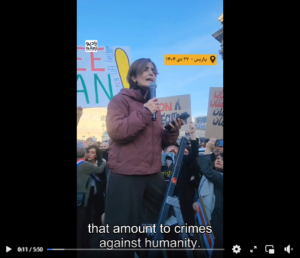
In this video, Leila Hosseinzadeh speech In today’s solidarity rally in Paris, lays it out in blunt, unfiltered language: in the latest wave of repression, the Islamic Republic has crossed the line from “street killings” into a level that international legal language can only understand as crimes against humanity, from shooting passersby and wounded people, to attacking medical facilities, to firing “finishing shots” on a wide scale.
At the same time, the internet shutdown is highlighted as a modern tool of repression: not just silencing the news but isolating an entire nation and turning it into a kind of collective prison. The message is simple: when communication is cut, repression becomes cheaper and easier.
One of the sharpest parts of the video is how it criticizes two parallel projects of distortion at once. On one side are Trump’s performative gestures of “support,” which in practice give the regime exactly what it needs to frame mass killing as “foreign interference,” and then even paint the victims as criminals. On the other side is an Israel-aligned opposition that links protesters to the “enemy,” making it easier for the state to justify crackdowns. In that same frame, the Pahlavi current is also challenged, especially the way it calls the murdered “casualties” and fuels division.
The video also takes aim at the so-called “axis of resistance left,” where (under the banner of anti-imperialism) some people literally cheer the killing of civilians by slapping them with security labels like “Mossad agents.” The conclusion is bitter but precise: the silence of parts of the international progressive camp is itself part of the disaster.
In the end, the speaker turns to the social and economic reality: price liberalization, the state’s retreat from public services, the housing and employment crises, water and energy breakdowns, and constant repression, and to people who step into the streets empty-handed, “either to die or to be free.”
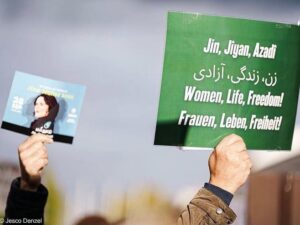
The central slogan is the one the world already knows: Woman, Life, Freedom. And the call is urgent: pressure governments and companies to restore internet access and break the communications siege. Tomorrow is too late.
January 17, 2026
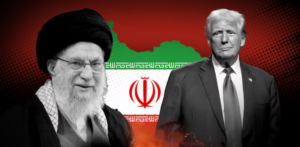
It looks like Trump’s view of Iran’s fascist state and a big chunk of the Western Left’s view have basically converged, because they’ve landed in the same ugly place: treating the Islamic Republic as a legitimate adult in the room, and Iranians as background noise.
Trump is out here thanking a fascist regime for “cancelling” execution sentences, as if mass death sentences are a normal administrative policy that can be paused like a bad subscription. As if the regime deserves applause for not doing the thing it had no right to do in the first place. This is how normalization works: you turn the regime from perpetrator into partner, from executioner into negotiator. You take the knife out of the killer’s hand and hand them a microphone.
And then you have Roger Waters claiming the regime “listened” to shopkeeper protests, like this is some responsive government making democratic adjustments. That framing is poison. Fascist regimes don’t “listen” in the same way a society does. They calculate. They tighten and loosen pressure the way a boot shifts on a neck, not out of conscience, but to avoid losing control. A tactical retreat is not reform. A temporary pause is not accountability. A propaganda-friendly concession is not justice.
What’s striking is how similar the emotional payoff is for both camps.
For Trump-world, it’s the fantasy of the strongman deal: praise the regime, get a “gesture,” declare progress, move on. For a slice of the Western Left, it’s the fantasy of the anti-imperialist story staying clean: if the regime can be described as rational, pragmatic, and capable of “responding,” then it can be kept inside the comforting script where the main villain is always Washington, and the people being crushed by the regime are inconvenient footnotes.
Different ideologies, same outcome: the normalization of fascism.
And it’s not accidental. It runs on an old, patronizing, racist habit of looking at West Asia through the same colonial lens, whether it’s Trump or Waters. The lens says: we are the interpreters; you are the interpreted. We decide which deaths count, which struggles are “authentic,” which uprisings are “CIA,” which executions are “internal affairs,” which women’s bodies are “culture,” and which protests are “useful.”
Yes, foreign interference is real. Sanctions are real. Great-power games are real. But the oldest trick in the book is using those realities to downgrade the most immediate reality of all: the regime that beats, imprisons, tortures, shoots, and executes people to stay in power. The Islamic Republic doesn’t become less fascist because Washington is cynical. The prison doesn’t get softer because geopolitics is dirty. A bullet doesn’t slow down because someone can write a clever thread about imperialism.
And here’s where the Western liberal comfort zone really breaks people’s brains. The neoliberal left, especially, can’t grasp the political and intellectual foundations of an anti-capitalist uprising, so it clings to top-down storylines like a flotation device. That’s why they keep repeating “Pahlavi, Pahlavi, Pahlavi,” even though he has no real legitimacy inside Iran. It’s an easy narrative: neat, televised, familiar. A “leader,” a “transition,” a “plan.” Something that looks like their own politics, just in a different accent.
But they can’t answer the basic question that ruins the whole fantasy: if this was just a scripted project from above, why did thousands of people in hundreds of cities pour into the streets, and why did the regime shoot them? Do you assume these people are ignorant and got fooled? If so, then why aren’t the ones who showed up at the regime’s state rallies counted as the “fooled” ones on the other side?
Because admitting that would mean admitting the script is a lie. It would mean recognizing that the reality on the ground is messier, more radical, more classed, more feminist, more explosive, and far more dangerous to the global comfort order than the TV version they’ve been sold.
We Iranians don’t need Western saviors. It’s actually up to us Iranians today to build an anti-fascist front: rooted in workers, women, students, and the crushed majority; independent from foreign patrons; ruthless about naming the immediate oppressor; and serious about organizing power from below. The West can either stop getting in the way or keep proving, again and again, that it prefers a “stable” fascism to a real liberation.
January 16, 2026
What does a revolution look like?
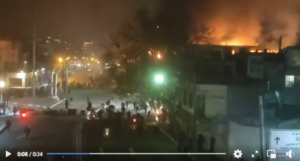
To me, it looks like that moment when a crowd suddenly realizes it’s not just that they have “nothing left to lose”, it’s that they’re taking the world back. And by “world,” I mean agency: the right to choose, the right to say no, the right to breathe without needing permission.
A revolution is the moment fear stops being privately hoarded and starts getting shared. And once fear is shared, the repression machine stops looking like one solid monster. It turns into something far more fragile: exhausted people, panicked commanders, contradictory orders, stray bullets, and lies that crumble like chalk off a cracked wall.
Video: Sabalan Street, Tehran, Thursday, January 8. The East Tehran Tax Administration building, what a symbol, what a place, for tearing down capitalism’s discriminatory “order”…
And now watch a bunch of fools and the politically naive (or even racists who see fascism in the East as culture) in the West rewrite everything under the label of “Pahlavi” and “Israeli interference.”
January 16, 2026
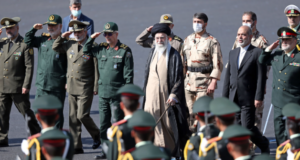
The Islamic regime’s army chief says, “If our young forces wanted to confront the protesters with the full power of weapons, they could have rounded everyone up in two hours. But because the ‘rioters’ were using ‘human shields,’ our forces defended the country and the people only by risking their own lives.”
This claim is familiar. Over the past two years, Israel has used the same story, saying Hamas uses Palestinian civilians as “human shields”, to justify genocide. The similarity is not an accident; it’s a technique. Fascist-style narratives always look for a moral excuse for violence. They turn killing from a choice into something “forced,” and they reduce the victim from a human being into a “tool.”
When you say “human shield,” you strip people of their names, faces, and right to live, and you turn them into objects in a scene of war and repression. Then the shooter presents himself as the savior: “We could have ended it fast, but we had morals.” That is the truth turned upside down: the killer becomes the victim, and the victim becomes the guilty one.
In Iran, the label “rioter” does the same job as the label “terrorist” does in Gaza. It removes politics from protest, and it removes humanity from the dead body. Then, “human shield” is used to wash responsibility away from every bullet. If a child is killed, if a passerby falls, if bodies are wrapped in plastic, the story is ready: “They hid behind the people.”
This single phrase works like a full machine: it numbs society, discredits witnesses, and dries up empathy. Fascism doesn’t begin with raw hate; it begins with controlling language. First, it takes the words, then it takes the lives.
And today’s fascism is not only boots and batons; it’s a storytelling industry. Media, official platforms, and an army of slogans work together to knead reality like dough: repression becomes “defense,” murder becomes “necessary,” and people become “shields.” This is the logic of impunity: if the victim is not treated as fully human, then no crime is seen as a crime.
That’s exactly why we need a third path: not siding with state repression in the name of “security” and “unity,” and not excusing militarism and state terror in the name of “self-defense.” A third path means standing firmly with ordinary people: women, workers, children, citizens, and refugees. It means politics from below, independent organizing, blunt truth-telling, and solidarity that doesn’t get trapped by propaganda or by states’ narrative wars.
A third path means opposing occupation and mass killing in Palestine, while also opposing repression and mass killing in Iran. It means an anti-war position that can stand with Ukraine without hesitation and defend Rojava against Islamic reaction. Against dehumanization in every costume.
You can’t defeat fascism by choosing between two lies. You have to break the lying machine, and that takes independent social power, an awake conscience, and real organizations on the ground.
January 16, 2026
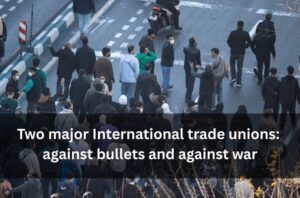
In the wake of escalating protests and strike action across Iran since late 2025—amid intensifying state repression and an internet shutdown—two major labor organizations, the Dutch Trade Union Confederation (FNV) and the International Union of Food, Agricultural, Hotel, Restaurant, Catering, Tobacco and Allied Workers’ Associations (IUF), have issued separate statements calling for an immediate end to state violence, the release of detained labor activists, and guarantees for independent union organizing.
Both statements converge on several core points:
they frame protests and strikes as an intelligible response to deepening political and livelihood crises; condemn the securitization of labor organizing; and present independent unionization, freedom of expression, and freedom of assembly not as political concessions, but as fundamental rights of workers and citizens.
At the same time, the statements suggest that, for a segment of the international trade union movement, Iran is not merely a domestic crisis, but a test of whether one can resist state repression while also drawing a clear line against war-making projects and externally engineered power arrangements.
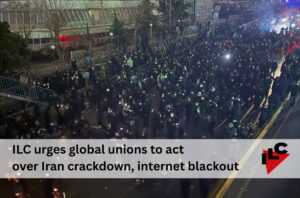
Iran Labor confederation – Abroad called on unions to publicly condemn killings, arrests, and the internet shutdown; to pressure their own governments to pursue diplomatic measures aimed at halting repression; to support the public’s access to a “free internet”; and to pursue action through international bodies, including the ILO.
January 15, 2026
When a journalist asks Trump, “Have you seen the bodies wrapped in plastic?”, he repeats the Islamic fascist regime’s false narrative and says: “They (the protesters) were shooting, and they (the Islamic Republic) responded.”
That sentence is the distilled essence of a policy that reduces people’s lives to “two sides of a conflict” and places the killer in the position of a legitimate negotiating partner.
Pahlavi and the pro–military intervention crowd who have been waiting for power via Trump are only now realizing (again) that they’ve been played. Trump believes the “other side” talks about “stopping the killings and executions” and about a “return to calm.” And we all know who this “other side” is: the criminal regime that has drowned thousands of lives and dreams in blood, the same regime that enjoys full impunity and remains a “preferred partner for negotiations.”
Reza, just like his father, who in 1978 left Iran on the orders of the U.S. ambassador, hoping to return, handed the country over to Khomeini, and died in Egypt, once again has to wait for a “signal.” When history turns into spectacle, it repeats itself. For us, the people of Iran, this bitter experience has been enormously costly.
The Pahlavi project must be understood within the framework of coordination between the United States and the Islamic regime to contain and crush the massive uprising of the Iranian people. They may present themselves as “enemies,” but there is one thing they will never hand over: West Asia to a mass, progressive, secular, anti-authoritarian movement.
From Erdoğan to Netanyahu (the genocide perpetrator), with all their filthy and contradictory propaganda, they are pleased to see the Iranian people drowned in blood and are actively pushing their fabricated narratives. The brutal repression of Iranians is a “manageable cost” for the existing order.
Do you really think the Islamic Republic, after two decades of telling the United States “no” over the nuclear issue and dismissing human rights as a Western game against it, has suddenly decided to say “yes” to Trump to stop killing its opponents?
The reality is something else entirely. Iranian society will not be silenced by this horrific massacre. The Islamic regime has entered a much deeper crisis in its relationship with society. The meaning is clear: the West is staying silent in the face of the regime’s crimes to preserve security privileges and cheap energy in the region.
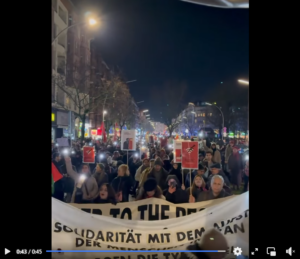
January 15, 2026
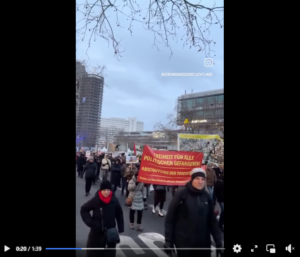
Last night’s protest in Berlin brought together thousands of leftist and progressive Iranians.
Support the people of Iran against a theocratic regime, and at the same time condemn foreign interference and the geopolitical games of states. Take to the streets with red flags. Stand alongside Iranian democrats and seculars. Turn your attention away from what authoritarian states, from East to West, are telling you, and return to democracy, human rights, and human dignity. Say no to war.
Do not wait for Iranians to organize everything on their own. Take to the streets. This is not just a political position; it is a matter of humanity.
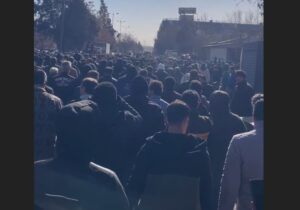
January 15, 2026
Racist, fascist apologist journalists who deliberately erase the realities of Iranian society are now shamelessly talking about a so-called “U.S. defeat in Iran.” This level of analysis is not just stupid—it is deeply racist. You don’t see Iran as a living society; you see it as nothing more than a stage in a great-power game, and in the process, you erase its people.
Iran today is one of the very few places where people are paying a real, heavy price to fight both fascism and for democracy at the same time. You can’t hide that reality behind geopolitical headlines. If you have even a minimum of professional integrity, go and read, at least, the official research produced by the Islamic Republic’s own state on secularization and the decline of religiosity in Iranian society. The reality under the surface is screaming.
For you, an attack on a mosque is automatically an “American plot,” because you either can’t or don’t want to see the deep, long-accumulated rift between a repressive religious institution and a young, urban, largely secular society. This is a social reality, not an intelligence-agency script. Try, just once, to step outside your clichés.
If you know anything about journalism, do some reading before passing judgment. You don’t even know Persian well enough to read the Iranian state’s own data, yet you feel entitled to copy-paste the narratives of an authoritarian regime. The data exists. The research exists. The signs are obvious. Google it.
Iranian society is not some abstract idea limited to Pahlavi or Islamism. It is a country of 90 million people, with a vast range of different ways of thinking and cultures.
What do these same journalists, who in Europe and the United States claim to be concerned about the situation of migrants and refugees, have to say about the narrative of hundreds of Afghan migrants being recruited by Mossad? If Israel can penetrate another country to this extent, on every level, and expand its intelligence operations so deeply, then what exactly is left of “independence” and “sovereignty” that is supposedly being defended by brutally killing protesters in the streets? Don’t fall for the narratives of fascism.
Support the protests of the Iranian people and say no to foreign intervention as well. These two positions are not in conflict.
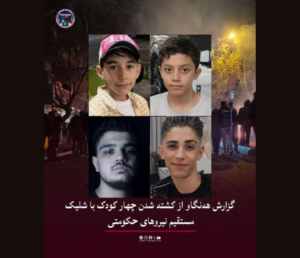
January 15, 2026
The human rights organization Hengaw has been able to document the identities of four children killed by the Islamic regime. Jabbar Panahi, Sina Ashkabousi, Abolfazl Yaghmouri, and Mohammad Nouri were killed during popular protests in the cities of Chenarshahijan (Qaemiyeh), Qom, Fardis, and Tehran after being directly shot with live ammunition by Islamic Republic security forces.
Hengaw has learned through conversations with the relatives of Erfan Soltani that his execution, which had previously been announced to his family for Wednesday, was not carried out and has been postponed.
Due to the ongoing internet shutdown and severe communication restrictions, real-time reporting on this case is not currently possible.
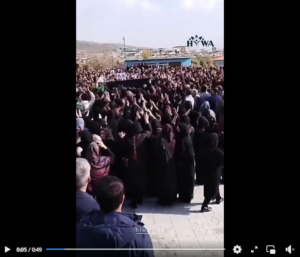
January 15, 2026
We should not fall for the false narratives of Islamic fascism. The images the regime broadcasts from Tehran do not represent Iranian society as a whole.
The regime can easily stage-manage scenes in Tehran, but not across the entire country. This video, shared by Kurdish activists, shows the funeral of Alireza Seydi, a 16-year-old teenager killed in the protests in the small town of Abdanan.
The crowd is not only indifferent to religious rituals; they send off their dead with applause and defiant chants. Shortly after, people chant that Khamenei is finished.
Forget the talk of foreign interference. The truth is right here. Iranian society, after experiencing such brutal killings, has entered a point of no return. The Islamic regime must fall.
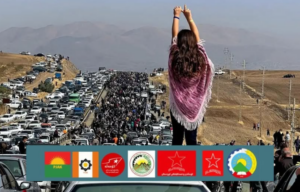
January 15, 2026
Reuters according to three sources, who included a senior Iranian official and who all spoke on condition of anonymity, said Armed Kurdish separatist groups sought to cross the border into Iran from Iraq. Three sources familiar with the matter told Reuters, in a sign of foreign entities potentially seeking to take advantage of instability after days of crackdown on protests against Tehran.
This is false news as far as we know:
None of the Kurdish opposition organizations has carried out any military operations or actions during this period. The seven parties that issued the call for a general strike in Kurdistan not only made no moves along the borders but explicitly refrained from any armed action. In terms of on-the-ground reality and logistical capacity, the only force that could potentially have taken action is PJAK, and this is the key point: PJAK has not carried out any action either.
For that reason, the so-called “breaking news” now being circulated should be placed directly against the reports of the mass killing of civilians. In my view, the death toll could in fact be higher than what has been announced until now.
The purpose of the Reuters narrative, engineered by the Islamic Republic’s intelligence machine, is clear: to manufacture a security pretext that can justify large-scale military operations by Islamic fascism.
Support the protests of the Iranian people and say no to foreign intervention as well. These two positions are not in conflict.
To be clear: during this entire period, none of the Kurdish parties has carried out any action anywhere. Any claim to the contrary is not a report of facts, but part of a security scenario designed to divert public attention, normalize repression, and prepare the ground for escalating state violence.
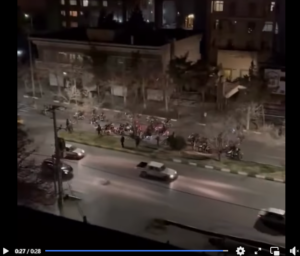
January 14, 2026
Friday, January 9:
Images showing direct gunfire by Islamic regime forces toward protesters. The police are shouting, “go, go,” and then they shot.
No amount of anti-imperialist posturing or instrumentalization of Palestine’s just cause can hide what the Islamic Republic of Iran is:
- Fascist toward Iranian citizens
- Patriarchal toward women and queer communities
- Predatory-oligarchic Capitalist toward workers
- Colonial toward subaltern nations inside Iran
- Imperial in the region
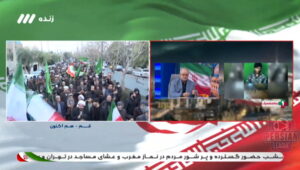
January 14, 2026
The head of Iran’s judiciary has once again stressed the need for the rapid trial and punishment of those arrested during the recent nationwide protests. According to Fars News Agency, which is affiliated with the IRGC, Ejei said after a “five-hour visit” to one of Tehran’s prisons, that some detainees would be tried “in public, with media coverage.”
He also instructed prosecutors to go after what he called “figures who incited the public,” adding: “Some individuals who stirred people up and caused damage, in addition to being punished, must also be held financially responsible for all material losses.”
At the same time, Justice Minister Amin Hossein Rahimi told domestic media that the protests on January 8 and 9 amounted to an “all-out internal war.” He warned: “Anyone who was arrested during this period is definitely guilty, simply because they were present, though the specific charges may differ.”
According to the human rights website HRANA, by the end of the 17th day of protests, the arrests of 18,434 people had been confirmed, and so far 97 cases of forced confessions have been broadcast on state television.
Following Ejei’s repeated emphasis on fast-track prosecutions, human rights organizations have warned about the risk of “summary,” staged trials that fall far short of fair trial standards, as well as a possible increase in death sentences on charges such as “enmity against God.”
During the 2019 protests and later in the “Woman, Life, Freedom” movement, this approach was frequently accompanied by charges like moharebeh, corruption on earth, collusion, or acting against national security.
Take action now, support protesters.
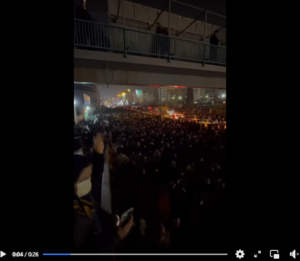
January 14, 2026
This new video is from Thursday, January 8, on Kashani Boulevard toward Sadeghiyeh Square in Tehran.
Just look at the size of this crowd. These are people who came out fully aware of the risks—live bullets, arrest, even death. This presence is not random, not emotional, and not the result of some outside call. It is a conscious decision by people who feel they have nothing left to lose except humiliation and silence.
Anyone who reduces the anger and uprising of Iranians to “foreign interference” or to “Pahlavi” is either not stupid but knowingly lying, or is a racist who does not want Iranians to deserve freedom, dignity, and the right to decide their own future. Or worse, they are someone cheering from afar, treating the clash between East and West like a Colosseum spectacle—applauding a gladiator fight while real people’s lives, futures, and deaths mean nothing to them.
Our lives as Iranians cannot be reduced to this naive and stupid “East versus West” binary. We are not pieces on a geopolitical chessboard, and we are not tools for settling power struggles. The people of Iran are fighting for freedom—for reclaiming their crushed dignity, for the right to a normal life, for the ability to breathe without fear. This anger is the anger of a humiliated society that wants to take back its name, its voice, and its future.
January 14, 2026
Part of the Şık Makas workers’ statement reads:
“We salute the people and working class of Iran, who for 17 days have been resisting poverty, repression, and a reactionary regime. The Iranian regime is committing crimes against working people and has shut down internet access to hide these crimes. Nevertheless, as Şık Makas workers, we will echo the voices of Iranian workers and support their struggle. Şık Makas workers will win, Iranian working people will win, the working class will win. We will win through unity.”
January 13, 2026
She was born in March 2009. Her name is Parnian, Ahmad’s daughter. In those same days, when we were running through the streets in June of that year for the Green Movement, she was in her mother’s arms, being breastfed. This is how raw and real the distance between generations is. This is exactly what the struggle for freedom looks like: a chain of lives bound together, not a single moment, not a lone hero.
Today, I have comrades who were guerrillas in the mountains of Kurdistan when I was born. They fought before us, at a heavy cost: exile, prison, death. Then came us. And then came Parnian. This is the history of struggle in our country: continuous, generational, stubborn, and unyielding. None of us started from zero, and none of us is the final link.
That is why there is no turning back. Not through threats, not through humiliation, not through poisonous narratives. Let anyone say whatever they want; we did not write our history with their permission, and we will not continue it with their approval. This path has been built with blood, hope, and the persistence of generations.
We will defeat fascism because we have learned how to endure. Because we know that freedom is an inheritance passed down from our marginalized mothers, from comrades in the mountains, and from children like Parnian, and it is our responsibility to pass it on, stronger and more intact, to the next generation.
Don’t forget: these images are only from Tehran. We have no information about what is happening in hundreds of other cities across Iran.
January 13, 2026
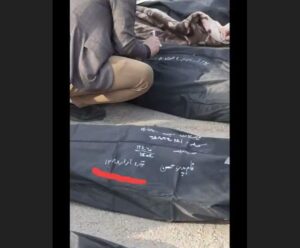
The fascist regime has massacred thousands of people.
The numbers are not precise, but given the scale of public participation, the footage of clashes, and the widespread use of live fire against protesters, the figures being reported are extremely high. Communication with Iran has been cut off, and everything we know comes either from the regime itself or from sources that cannot yet be independently verified.
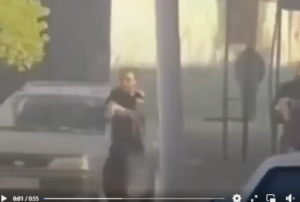
These are videos showing security forces firing directly at civilians. The Islamic regime is lying. The evidence exists. The proof exists. The Islamic regime is lying. They are the terrorists. The fascist regime has carried out a massacre and is now lying about it.
They shot down a passenger plane over Tehran 6 years ago and lied to the world about it for three days. They lie.
Fascism is built on lies; lying is its backbone.
January 13, 2026
People like me have no responsibility for Pahlavi, and we owe nothing to his projects or his propaganda. We are not responsible for the warmongering of Trump and Netanyahu, and we are not soldiers of any geopolitical bloc.
We are real human beings—with bodies, with lives, with families, with fear and hope. We pay the price of politics with our own flesh and blood, not through safe analyses from university desks or TV studios. We have the right to want a life, not to be disposable pieces on other people’s geopolitical chessboards.
We do not want to be victims of a so-called “fight against the West” while at the same time being used as tools in a Western narrative of “saving us from dictatorship.” Freedom does not come from bombs, from sanctions, or from leaders imported from outside. If freedom is going to be real, it has to grow from within society and rest on the will of the people. That is exactly why people took to the streets. Anything else is just a shift in violence, not the end of it.
A Westerner will never refuse to take part in elections just because there is a political party they dislike. And even if they do, they are usually not the ones who pay the price first. We know this from lived experience, thousands of refugees and migrants in Greece since 2019.
Those who acted irresponsibly, who chose not to vote against a government they themselves call far-right or fascist, or who split votes among irrelevant groups, are often the very same people now trying to lecture Iranians like me—and analyzing Iran’s protests with lazy CIA labels.
Every form of democratic struggle has been taken away from us. Every form of social dialogue, civic activity, and cooperation has been stripped from our society. You cannot look at our world through your own geopolitical lens. You cannot repeat the regime’s authoritarian narrative every time it massacres people and then reassure yourself that “Western imperialism lost again.” That is racism.
No Westerner has the right to tell me which enemy I must condemn first to be heard, to tell me which war is “necessary,” or to decide which leader is the “realistic option” for me. No Westerner has that right. Solidarity means standing with people who are fighting for exactly what you want yourself: a dignified life—a life without war and sanctions.
My life is not a tool for managing other people’s geopolitical anxieties. If you want real solidarity, defend people’s right to make independent decisions—instead of hiding behind mainstream media scenarios and telling us how to live.
Defend the people of Iran against a theocratic regime, and at the same time condemn foreign interference and the geopolitical games of states.
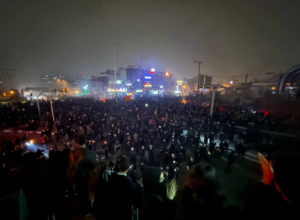
January 12, 2026
What has happened in Iran over these past few days should be seen exactly like a military coup scenario, a coup against millions of people who are exhausted, worn down, and fed up with authoritarian rule. A coup carried out not with tanks in official squares, but with bullets in the streets and with the internet shut down. People who took to the streets to demand the most basic rights were brutally repressed under the banner of “fighting terrorism.”
There are still no final, fully verifiable figures, but reports from human rights organizations point to widespread killing, with some estimates speaking of thousands (about 12 thousand) killed and injured. This level of violence is essentially impossible for the ruling Islamic fascism to justify today without the label of “counter-terrorism”; that label is the backbone of repression.
Within this context, Pahlavi’s behavior needs to be analyzed more carefully and without simplification. His role has been neither that of a “democratic alternative” nor merely another opposition voice. In practice, he has functioned as a catalyst for the suppression of the uprising. His presence and interventions allowed the regime to reframe mass protests, from a legitimate, rights-based movement into a “security scenario” tied to foreign interference.
The people of Iran have the right to protest. They have the right to demand freedom and democracy. They have the right to independent unions, political parties, and freedom of expression. These are not radical or ideological demands; they are the most basic human rights. The constant and violent repression of society in the name of “confronting the West” has not only destroyed these rights but pushed the country to the edge of social collapse.
What is called “fighting the West” has, for years, become a code word for organized plunder, the looting of resources, and the silencing of every independent voice. This is neither defending the country nor resistance; it is the preservation of power at any cost, built on the ruins of millions of lives.
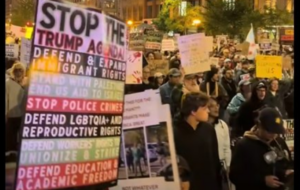
January 12, 2026
Today, more than ever, we need solidarity from progressive and pro-democracy currents. Moving beyond the Islamic regime is a legitimate right of the Iranian people, a right forged through years of repression, discrimination, poverty, and political exclusion.
But this must be said clearly: imposing a leader from above or relying on foreign intervention will not improve the situation; it can push it toward an even deeper disaster. Freedom is not built by proxy, and it is not built with bombs or sanctions.
All progressive political forces must stand unconditionally with the protests of the Iranian people and, at the same time, firmly condemn foreign intervention and war. Real solidarity means defending the collective will of the people, not taking it over. No to foreign intervention. No to war.
It doesn’t matter where you are or which country you live in. It doesn’t matter whether your political organization is large or small. Take to the streets and defend the rights of the Iranian people, because this struggle ultimately comes back to you as well. The war-driven and authoritarian policies of figures like Trump, Putin, and Netanyahu do not threaten only Iran; they are pushing our world toward destruction. This is not just about Iran. It is about all of us.
Defend the people of Iran against a theocratic regime, and at the same time condemn foreign interference and the geopolitical games of states. Take to the streets with red flags. Stand alongside Iranian democratic and secular forces. Turn your attention away from what authoritarian governments, from East to West, are telling you, and return to democracy, human rights, and human dignity. Say no to war.
Do not wait for Iranians to organize everything on their own. Take to the streets. This is not just a political position; it is a matter of humanity.
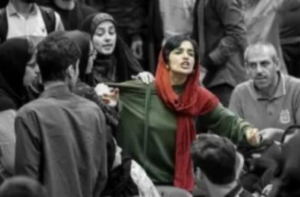
January 12, 2026
As expected, the fascist regime staged its own street spectacle in a few cities. But, we should not fall captive to this dirty stage-managing. History is full of brutal dictators who have again and again managed to put on shows of mass mobilization, mobilizations that are neither proof of legitimacy nor signs of real consent.
From twentieth-century fascism to today’s authoritarianism, lining up crowds has always been one of power’s classic tools. Trump, with more than 76 million votes, did not become a democrat; he used the legitimacy of those votes to normalize violence, lies, and exclusion. Numbers, crowds, and images do not create virtue on their own. So no, let’s not get trapped in this filthy spectacle, the very one that Islamic fascism has been skillfully performing in Iran for four decades.
The issue is how that crowd is produced, and through what mechanisms. At the core of this performance is turning people against one another: constant polarization, constant threats, and the construction of an enemy that swallows every real protest. The model of fascist mass mobilization in Iran is clear: coercion. Forcing public-sector employees into the streets, the organized mobilization of regime-linked institutions, administrative cases and intimidation. This coercion has been going on for years, and by itself it produces a large crowd. Alongside it comes ideological supporters and parts of the “grey” public—people who are sensitive to foreign intervention or afraid of instability. These are realities and denying them helps no one.
But the real question lies elsewhere, and it is deliberately pushed aside. Why do people facing deep economic, political, and social crises have no safe or legal way to pursue their demands? Why does independent organizing come with the price of prison? Why is political party activity treated as a crime? Why are freedom of expression, freedom of assembly, and the right to protest effectively absent? Why is it that every time a worker, a teacher, a woman, a student, or a poor person protests, the label of “foreign interference” is immediately ready to justify violent repression?
This whole spectacle exists precisely to escape these questions—to erase the problem itself, and to turn a real crisis of governance into a security show. Fascism always works this way: it creates the crisis, then uses that same crisis as an excuse for repression. If we fall for this performance, we accept a world where people are either “obedient” or “foreign agents,” with no space left for a conscious, independent, protesting citizen.
So no, let’s not be trapped by this fascist staging. Let’s flip the picture around. The issue is not “mobilized crowds,” but people who have been deliberately stripped of their most basic political rights. The issue is not a controlled street, but a street that erupts because every other path has been blocked. Everything else is a distraction, and fascism feeds precisely on these distractions.
Still, the real picture of Iranian society is this: people who took to the streets in the dark, under the threat of live gunfire, arrest, torture, and execution. That is the truth, not the lie they are manufacturing in broad daylight for the world.
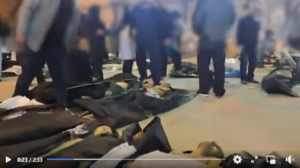
January 12, 2026
The Islamic fascism ruling in #Tehran has massacred thousands of people in the streets and is now falsifying responsibility for this large-scale killing by blaming the very protesters themselves. Hundreds of thousands of people came out peacefully in dozens of Iranian cities to protest the current situation, and then overnight everything was blamed on U.S. and Israeli interference. They could not have sold this savage and filthy lie without the presence of Pahlavi.
Let’s look at everything again.
The U.S. National Security Strategy document explicitly states that previous U.S. policies of “pressuring for democracy, human rights, and regime change” in the Middle East were a mistake. From now on, countries in the region are to be accepted “as they are,” not as the West would like them to be.
The document also makes clear that the Middle East is no longer the “center of gravity” of U.S. security policy. This does not mean the region is unimportant; it means Washington no longer intends to pay a permanent strategic cost for it. In other words, at the strategic level, democracy, human rights, and even the nature of political systems in countries like Iran are no longer top U.S. priorities.
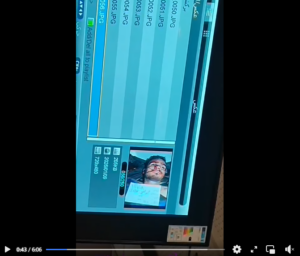
We are facing a horrific massacre in #Iran, one whose real scale will not be exposed until the internet and communication channels are restored. We are likely dealing with mass killing on a scale comparable to what has happened in Gaza. Islamic fascism in Iran has launched a massacre.
This footage from Kahrizak is from Saturday, January 10. Published by media activists.
January 11, 2026
This is fascism.
This is fascism.
January 11, 2026
January 11, 2026
January 10, 2026
January 10, 2026
January 10, 2026
January 10, 2026
7 January 2026
January 9, 2026
January 9, 2026
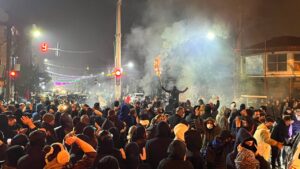
January 9, 2026
For more than 12 hours, Iran’s internet has been cut, and communications have been disrupted. From the outside, we have almost no reliable facts or a clear picture of what’s happening inside.
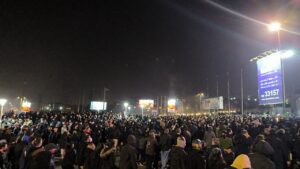
January 9, 2026
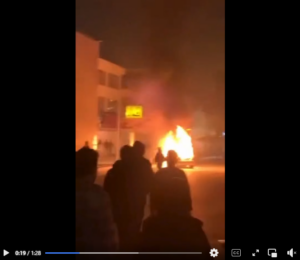
January 8, 2026
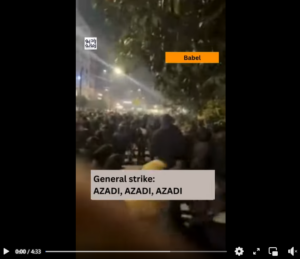
January 7, 2026
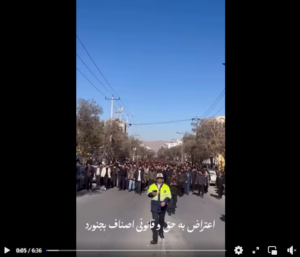
January 7, 2026
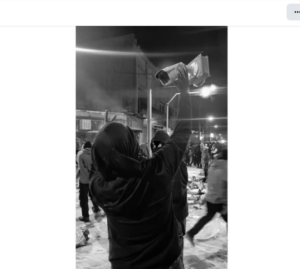
January 7, 2026
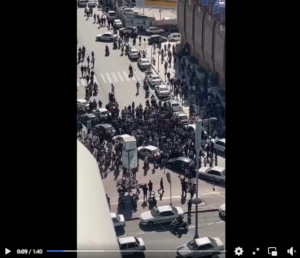
January 7, 2026
January 6, 2026
Seven Kurdish opposition parties announced a call for a nationwide strike to condemn the killing of civilians in Ilam, Kermanshah, and Lorestan, all Kurdish-populated regions.
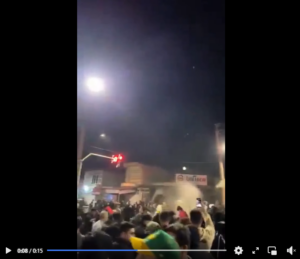
January 6, 2026
January 5, 2026
We are standing at one of the most decisive moments in our contemporary history. What is unfolding today in the streets, in strikes, and in nationwide protests is a continuation of the 1401 uprising—an uprising that began with the slogan “Woman, Life, Freedom” and tore the veil off institutionalized discrimination, systematic humiliation, naked repression, and structural poverty. That uprising made one thing unmistakably clear: society is no longer willing to keep living an imposed life under this unjust order.
The frontline of compulsory hijab has been broken, and we declared openly that we will not tolerate sex and gender apartheid. We declared that we despise superstition and that we will not bargain away human dignity. And when the regime answered us with bullets, prison, and executions, we stood our ground. With the cry of unity—against poverty and corruption—we said we will not step back until our unfinished revolution is won.
Today, loyal to that vow, we have come into the streets and we chant: Freedom, freedom, freedom.
Today we are here not only for bread, but for life; not only for survival, but for dignity, human worth, and a humane future.
Runaway inflation has crushed the majority. Wages and pensions that sit far below the poverty line and the basic cost of living, predatory privatization, rent-seeking and corruption, the rise of multiple mafias, repression, prison and executions, and warmongering policies have pushed people’s lives to the edge of collapse. Society has reached a boiling point, and the nationwide protests are the direct reflection of this crisis.
Merchants and shopkeepers—often the “thermometer” of a collapsing economy—have entered the arena through strike action.
Today’s protest is a protest against a parasitic billionaire class that has dragged people’s lives into ruin. The issue is not just the sky-high dollar rate or rising prices; the issue is the entire structure that tramples our human dignity every single day. That is why everyone—from Gen Z to retirees who shout every day, “Livelihood, dignity, our undeniable right”—has been driven into the streets.
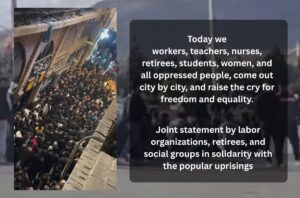
Today we—workers, teachers, nurses, retirees, students, women, and all oppressed people—come out city by city, and raise the cry for freedom and equality.
How long poverty? How long slavery? How long captivity in the grip of contractors and the water, electricity, and healthcare mafias—networks that grow fatter every day through their ties to power blocs, while people’s lives are destroyed more and more?
How long prison, execution, compulsory hijab decrees, and patrols of repression?
We have no quarrel with the people of the world. We do not need nuclear enrichment or proxy forces. These policies are what have broken people’s backs.
We, the organizations and signatories of this statement, consider ourselves an inseparable part of this nationwide uprising. In one voice with the slogan “Woman, Life, Freedom,” we declare our full support and solidarity with the ongoing struggles of the people for freedom, welfare, justice, and human dignity—and we emphasize the following:
We stand united and firmly against state repression and killing, and we stand with the families of those who have been slain as they seek justice. Protest is our right. We will fight with all our strength for the freedom of everyone arrested in the popular protests and for all political prisoners, and we demand an “Iran without executions.”
In support of nationwide strikes, together with our families we will take gatherings into the city centers and make the ranks of street protest stronger and more powerful.
Against attempts to divide us, we will unite our ranks with the slogans “Unity, unity,” “Against poverty and corruption,” and “Death to the dictator.” And in one voice with the people of Zahedan we will shout: Now is the time for unity, now is the time for revolution.
A 700,000-toman subsidy is not an answer to the poverty imposed by wages that are repeatedly far below the cost-of-living basket. Do not talk to us about an “empty treasury.” The astronomical budgets of the forces of repression, proxy forces, and ineffective religious institutions must be cut. The billions in wealth held by ayatollahs, the privileged children of officials, and regime networks must be returned to the people—so it can be spent on people’s lives and on reducing the costs of bread, gasoline, and more.
We do not need any form of leadership, and we emphasize once again: our demand is to end a century of exploitation and despotism, and to build a society where a plundering minority does not decide people’s fate from above their heads.
The decisive continuation of protests, the expansion of strikes, vigilance, and unity are the guarantees of our advance and the realization of our suppressed dreams. We will continue the path we have chosen with strength—and through our unity and solidarity, we will bring this slavery, poverty, humiliation, and inequality to an end.
Signatories:
1- Retirees’ Unity
2- Kermanshah Electricity & Metal Association
3- Don’t Execute
4- Justice Seekers (Families Seeking Justice)
5- Organizing Council of Contract Oil Workers’ Protests
6- Organizing Council of Non-Official Oil Workers (Third-Party/Arkan-e Sales)
7- Coordinating Council of Nurses’ Protests
8- Voice of Iranian Women
Note: Most of the organizations named above are not officially recognized by the state and are treated as illegal. Many of their members have faced police pressure, and some are currently detained or under arrest.
January 5, 2026
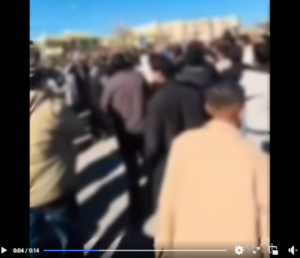
People in the city of Yasuj have gathered outside the governor’s office, demanding the release of those arrested over the past few days. They’re chanting strong, hard-hitting slogans that show just how deep the break is between the state and ordinary people:
“Their kids are in Canada, our kids are in prison.”
That line points straight at a system of organized corruption, where dozens of officials live a luxury lifestyle, while people pay the price of sanctions and corruption.
At the same time, the head of the judiciary, ignoring the spread of the protests, announced that there would be no leniency for detained protesters, and that final verdicts in their cases should be issued as quickly as possible.
January 5, 2026
If there really were a serious anti-war movement in the West, one that ties being anti-war to class politics and anti-racism, not to moral posturing and media spectacle, this would be its moment of truth.
This would be the best time to step in without hesitation, confront U.S. intervention head-on, and jam the war machine in the streets, in unions, and on campuses. And at the same time, it would stand with the people of Iran and their protests, not from above, not treating them as “material” for geopolitical debates, but as a real force fighting for freedom and a livable life under repression and economic collapse.
A real anti-war movement starts where “anti-imperialism” becomes concrete action: cutting political and media backing for war, exposing and disrupting weapons networks, pressuring the state to halt operations and end collective punishment through sanctions, and standing with those getting crushed at the same time by bombs and by batons. A movement like that wouldn’t let Iranians’ suffering get turned into propaganda.
Silence or hesitation at a moment like this means being anti-war only kicks in when it costs nothing, meaning “class” and “anti-racism” have stayed pretty words. Crises rip the masks off: either anti-war politics means challenging your own government and backing people under fire, or it isn’t politics at all, it’s just a storyline.
January 4, 2026
During the same days when Iran was under attack by Israel and the United States, some right-wing opposition currents, from the MEK to monarchists/pro-Pahlavi groups, were calling on people to flood the streets so that “the job could be finished.” If Iranian society really moved by outside command, that moment should have been the perfect chance for a top-down mobilization: the country under bombardment, and an open invitation to revolt. But it didn’t happen.
There was no mass celebration of the bombing, no uprising in support of the attack. That fact makes one thing clear: the driving force behind protest in Iran is not dependence on some foreign project. Some factions may cheer for foreign interference or even military action, but that doesn’t mean they carry broad weight or legitimacy inside society.
The core energy of protest comes from somewhere else: real life. From livelihoods, dignity, freedom, the right to self-determination, and the rejection of a form of rule that has taken society hostage.
So the question is: why does the “foreign hand” story stick so easily in countries like Iran? The answer lies in political and communication structures. When transparent, legal, and accountable channels for participation are blocked; when independent organizing and a free press are suppressed; and when citizens’ connections with people in other societies are controlled and managed, the public sphere turns into a space of rumor, fear, and narrative-making.
In those conditions, an authoritarian state can rebuild its preferred storyline and present it as reality, in order to make repression look reasonable. Yet even in that communication darkness, one question remains sharp and decisive: why are people willing to pay the price, to be injured, to be killed, and to risk losing everything for their cause?
The argument about imperialism is a valid one. People in Iran live under the simultaneous pressure of multiple power mechanisms. On one side, U.S. imperialism, through sanctions and economic warfare, drives up the cost of living and limits society’s ability to breathe.
On the other side, Chinese imperialism, operating inside those same sanctions, takes advantage of a privileged position and buys Iranian oil at deep discounts and lower prices. That is the logic of the capitalist world system: pressure from one pole becomes opportunity for another, and society is left grinding between the two.
January 4, 2026
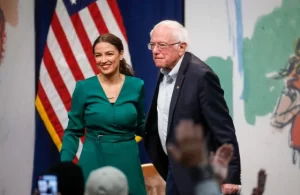
Bernie Sanders and Alexandria Ocasio-Cortez, with the way they frame this, are shrinking the historical reality of our moment. The issue today is not simply a few “misconduct” cases or the “illegality” of certain U.S. executive actions, and it can’t even be reduced to “oil” in the crude, literal sense. The real issue is a project to rebuild American political hegemony on a global scale. What we are witnessing is a deliberate return to the playbook of the 1960s and 1970s: a project aimed at redividing the world, redefining spheres of influence, and reorganizing the order of power.
Reducing this blunt reality to a handful of legal disputes or a few instances of presidential overreach is, in itself, a political distortion. If you measure military action or foreign intervention only by the yardstick of “Congressional authorization” or “violations of the law,” you miss the deeper question: what exactly is this state trying to rebuild, and which relationships of power is it trying to stabilize again?
You could see the same pattern recently in the way some U.S. politicians reacted to Washington’s actions in Venezuela: they narrowed the whole discussion to a legal argument about executive authority, while critics warned that the path smelled like regime change and oil interests. But even if we assume oil is part of the motive, oil is just a code word for something bigger: a reshuffling of power.
If China has expanded its influence in Africa through massive spending, lending, and trapping states in cycles of debt; if Russia is waging war against Ukraine to control energy corridors and transit routes into Europe; then the United States is acting by the very same logic of power: trying to return to its previous hegemonic position, or at least preventing a stable multipolar order in which Washington is no longer the final rule-maker. This is not an exception, and it is not a deviation. It is the normal logic of the global capitalist order, reproduced in different forms.
This is exactly where we run into the classic mindset of the “neoliberalised left.” Inside the United States, the crisis is reduced to a few violations, a few instances of lawbreaking, or a handful of limited reforms—as if making the process “legal” automatically means power itself has been restrained. But the U.S. political system only allows change within a very tightly controlled framework.
Zohran Mamdani’s victory in New York, with all its symbolic and political weight, proves that cracks exist: you can win, you can mobilize, you can push back against urban oligarchies. But none of this is decisive or sufficient on its own. If the underlying power relations are not shaken, these gains are quickly absorbed into the system’s own logic, or neutralized through administrative, judicial, and media coalitions. Mamdani is the mayor of New York today, and Sanders and Ocasio-Cortez are standing with him—but the real question is whether this win can become a lasting shift in the balance of forces, or whether it will dissolve inside the same urban-financial machinery that has always swallowed reforms.
Outside the United States, this distortion becomes even deeper. The same intellectual currents that, at home, strike an anti-corruption moral pose and limit the debate to legal procedures, show up internationally with vague “anti-imperialist” slogans—without any serious analysis of capital, state power, and global hegemony.
The result is a double standard: in Washington, everything becomes a “violation of the law” that can supposedly be fixed through oversight and reform; in the wider world, everything becomes “defending nations,” covered up with moral posturing. This double standard is neither accidental nor innocent. It has a function: to hide the reality of political power and push class contradictions to the margins on a global scale.
In this framework, the truth that should be kept in full view is deliberately removed: capital is not just markets and companies. Capital is organised political power. Hegemony means the ability to set the world’s agenda—to decide what counts as “legitimate,” what is “illegal,” what is “security,” what is “terrorism,” and who has the right to use force and who does not. When a hegemonic project begins, its tools are not limited to tanks and sanctions. Banks, media, international legal regimes, financial standards, and intelligence networks are all part of the same machine. Focusing on legal violations is like talking about a massive hurricane and complaining only about a broken window.
That is why a real confrontation with this hegemony has one basic condition: we must accept that the political power of capital has to be destabilised. Not through moralism, not through legal case-building, and not by hoping for a “better” world order whose foundations are imperial rivalry and capital accumulation. Destabilising power means building independent social force: organization, strikes, collective action, and turning scattered contradictions into a common will that can exert sustained pressure on both state and capital.
This is where Iran enters the picture. Because Iran is not just a geopolitical “case.” Iran is a living laboratory of our era’s contradictions: a society that, over the past two decades, has repeatedly produced different forms of organising, uprising, strikes, and resistance—against a state that treats survival as identical with securitisation and control. If the “hegemonic project” abroad takes the form of redividing the world and rearranging spheres of influence, inside countries it is completed through the same logic: shifting crisis onto society’s body, suffocating independent organisation, and turning everyday livelihood into an instrument of obedience. In these conditions, real politics moves beyond moral poses and legal games and comes down to one fundamental question: what force can push back the political power of capital—not just replace its managers?
This is what the neoliberalized left refuses to see, because seeing it comes with a cost: you have to leave the safe zone of moralism and procedural legalism and step into the terrain of power—where class, ownership, organization, and real coercion are what decide outcomes.
January 4, 2026
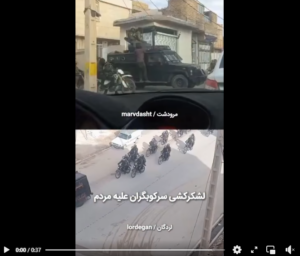
Footage shows the regime’s security forces moving in force into the cities of Lordegan in Chaharmahal and Bakhtiari province and Marvdasht in Fars province.
More than anything, these scenes reveal the government’s fear of the protests spreading. These are very small cities, but they have a high concentration of unemployed young people.
At least 16 dead in Iran during week of protests
January 4, 2026
As the protests spread in Iran, members of parliament said that the minimum wage would be increased by more than 40%. Pezeshkian’s administration also announced that state financial assistance and shopping cards for government-run stores will be expanded. The government deposited four months’ worth of this financial assistance into the accounts of the heads of families.
Alongside rapidly rising inflation, Iran is also facing a growing real unemployment rate. By the end of the year, nearly 450,000 jobs will be lost. The decline in both foreign and domestic investment, along with falling oil revenues, has pushed the economy into recession and increased the number of precarious workers, adding a large number of people to the ranks of the officially unemployed.
Under these conditions, the key question is whether the government can boost people’s purchasing power and calm public anger by injecting cash, expanding subsidy cards, and raising wages without controlling inflation. In the short term, protests may be halted through repression, but responding to the accumulated demands of a population worn down by poverty and hardship will not be that simple.
January 3, 2026
We are in an energy-centric global politics where capitals, from Tehran to Caracas to Washington, are jockeying to protect, exploit, or weaponize hydrocarbons. Whether through sanctions, direct military action, or market signaling, petroleum persists as a strategic pivot linking domestic economies, foreign policy calculus, and systemic risk on a global scale.
The situation with Iran is more complicated. In Iran, there are strong political and social movements that are fighting to end the current system without depending on foreign interference.
The Pahlavi camp is not a real social movement. Like the Mojahedin, it survives and appears powerful mainly through foreign funding and external support, but it has no genuine social base. It does not represent the social demands of Iranian society and defines itself only through opposition to the regime, not through a positive program rooted in people’s everyday struggles.
From this perspective, Iran’s situation is not comparable to Venezuela’s. The struggle of the Iranian people has broad legitimacy in global public opinion and has managed to clearly distance itself from right-wing and fascist governments. This distinction has been visible and politically meaningful.
January 3, 2026
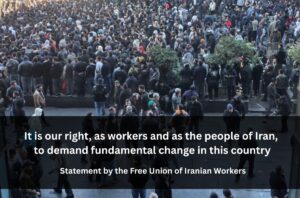
Statement by the Free Union of #Iranian Workers on the Nationwide, Freedom-Seeking Uprisings in Cities Across the Country
What is unfolding today on the streets of cities across Iran is the cry of people pushed to the edge by poverty and misery; inflation and soaring prices; repression and suffocation; misogyny; economic collapse; and the breakdown and destruction of the very foundations of social life. It is the direct result of the most brutal and repressive form of rightlessness imposed on the people of #Iran.
This uprising is a continuation of the popular uprisings of previous years, which were mercilessly crushed and drowned in blood by the Islamic Republic. It is another chapter in the people of Iran’s self-sacrificing struggle to put an end to the existing hell and to build a society that is democratic, free, prosperous, and free from discrimination, oppression, and exploitation.
Yet in the meantime, the Islamic Republic—now incapable of providing even the most basic requirements for the survival of a human society, such as water, electricity, energy, and clean air—continues to beat the drum of its own disgraceful survival and the ongoing destruction of the country. By sending repression forces into the streets and turning peaceful protests into bloodshed, it is once again trying to ride out the powerful and transformative wave of the Iranian people’s demand for fundamental change.
But the hard reality is this: the exhausted and dispossessed people of Iran have nothing left to lose. They are no longer willing to tolerate the current miserable conditions, even for a short time. At the same time, the government is completely incapable of bringing even the slightest improvement to these deeply catastrophic conditions.
What is happening today in the streets and cities of Iran is no longer just a protest—it is a revolution. A revolution that may experience ups and downs, advances and setbacks, but will not stop moving forward.
A chapter of history is being turned in this country—a history that, from the Constitutional Revolution to the 1979 Revolution, the people of Iran were unable to fully reshape. Now, in a world very different from the past, the country is going through a major social and political revolution, rooted in large modern social movements such as the workers’ movement, the teachers’ movement, the movement against executions and for human rights, the retirees’ movement, and the women’s movement.
We, in the Free Union of Iranian Workers—as an organization born out of the heart of the workers’ movement and decades of relentless struggle by workers—warn the leaders of the Islamic Republic against continuing policies of repression, violent crackdowns, and bloodshed in response to the people’s rightful demands. We declare that just as we stood shoulder to shoulder with the people of Iran from the very first days of the recent uprisings, we will continue our responsible struggle until the country is freed from the grip of oppression and dictatorship.
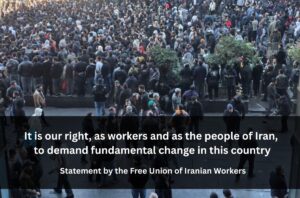
It is our right, as workers and as the people of Iran, to demand fundamental change in this country.
By calling on workers across the country—especially workers in key industries such as oil, steel, and automobile manufacturing—to play an effective role in the country’s political developments, we declare that, responsibly and with deep commitment to the cause of liberation for the working class and the people of Iran, we will stand firm against any attempt by the government to suppress the people, as well as against any top-down, engineered intervention over the heads of the Iranian people by regional or global powers.
Free Union of Iranian Workers – 3 January 2026
January 3, 2026
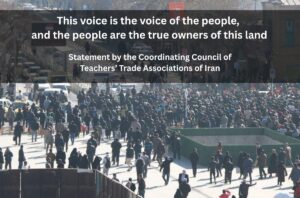
Statement by the Coordinating Council of Teachers’ Trade Associations
These protests are the people’s protests, not a tool for rivalry between factions or individuals.
What is unfolding today in Iran’s streets, squares, and neighborhoods is the cry of anger and pain from people whose bones have been crushed for years under poverty, discrimination, humiliation, injustice, and the constant ignoring of their demands.
These protests are not designed in political think tanks, nor are they a project of any particular faction. They are the voice of people demanding life, people who have nothing left to lose except the chains placed on their livelihoods, dignity, and future.
The people of Iran, teachers, workers, retirees, nurses, farmers, the unemployed, women, young people, residents of marginalized areas, and shopkeepers, have for years paid the price of incompetence, structural corruption, and chronic lies of those in power with their own flesh and bones.
Runaway inflation, the collapse of purchasing power, the destruction of education and healthcare, and the spread of poverty and instability are the direct result of policies made not for the people, but against them.
The Coordinating Council of Teachers’ Trade Associations of Iran declares clearly and loudly:
These protests are the people’s protests, not a tool for competition between factions or individuals.
The people are their own spokespersons. Any attempt to divert, engineer, or appropriate these protests is a betrayal of the people and a blow to the possibility of liberation.
The bitter lessons of the past have shown that wherever people have been sidelined, freedom and justice have been sacrificed.
Protest is a fundamental right of the people.
The response to this right is not batons or bullets, not prison or repression. A system of governance that refuses to hear the people’s voice will, sooner or later, face an even louder outcry.
Violence against the people does not solve the crisis; it deepens it, spreads it, and makes it uncontrollable.
Our message to the military, police, and security forces is this:
You come from this very society. Standing against the people means standing against your own future and the future of your children. Do not stain your hands with the blood of citizens, and be certain that history will not forget these moments.
The Coordinating Council of Teachers’ Trade Associations of Iran considers itself an inseparable part of the people and stands, and will continue to stand, beside them. Not for a share of power, not for authority, but for human dignity, social justice, and a future no longer built on fear and poverty.
This voice is the voice of the people, and the people are the true owners of this land.
Coordinating Council of Teachers’ Trade Associations of Iran
January 2, 2026
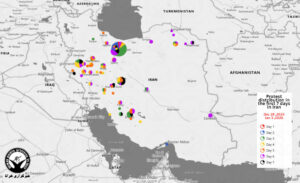
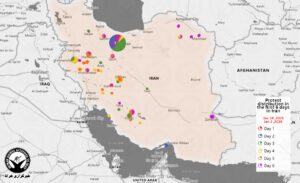
On the sixth day, the protests have turned into a nationwide map of discontent:
46 cities, 22 provinces, at least 113 protest gatherings, and 15 student demonstrations. From Zahedan to Mashhad, from Marvdasht and Fooladshahr to Qom, Qazvin, and Tehran.
What sets these protests apart is the way different demands are coming together: livelihoods, freedom, dignity, and physical safety. The slogans are not random. They are different layers of a single crisis that have finally piled up on top of each other.
Funerals for those killed have turned into scenes of protest, Marvdasht, Fooladshahr, and earlier, other cities. When public mourning becomes political, it means the gap between society and power has reached a dangerous point.
Tear gas in Qom, gunfire in Yasuj, violence in Tehran’s Narmak neighborhood, shots fired at passing cars in Marvdasht, and mass arrests in Zahedan, Lorestan, Alborz, and Tehran.
At the same time, the official narrative is being sealed off at high speed: “foreign interference,” “national security,” “the enemy.” Media directives, political threats, and reducing the crisis to a conspiracy.
Alongside this, a fake narrative pushed by Pahlavi/ Zionist networks is also doing its job, backed by billion-dollar budgets through TV channels and armies of Twitter and Instagram bots.
But reality is more stubborn than these narratives. These protests are not the result of a foreign tweet, nor an emotional reaction to a single event. Six days of continuity, repeated slogans, and the overlap of labor, economic, and political demands all point to one clear fact: the discontent is deep, accumulated, and no longer easy to push back.
Last night, 17 well-known civil activists also issued a joint statement, saying they stand with the people to reclaim the right to a dignified life, freedom, justice, human dignity, and control over their own destiny. Among them are Narges Mohammadi, the Nobel Peace Prize laureate, and Jafar Panahi, the well-known filmmaker.
The statement says: “Once again, the great movement of civil resistance by the people of Iran, by taking over the streets, is shouting the national will to remove the illegitimate system of the Islamic Republic.”
When a government responds not with answers but only with repression and narrative-making, protest does not stop. It changes shape, becomes more radical, and grows more social.
January 1, 2026
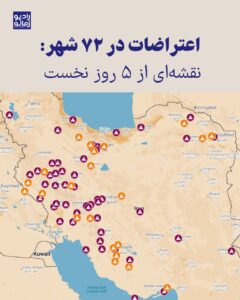
Protests continue in 72 cities in Iran.
January 1, 2026
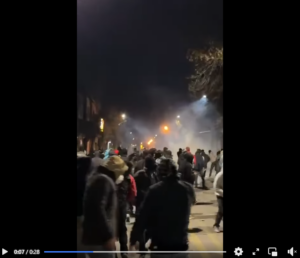
City of Hamedan, tonight.
Protests are continuing in multiple cities. Reports have emerged of security forces shooting directly at protesters, and several people have been killed.
January 1, 2026
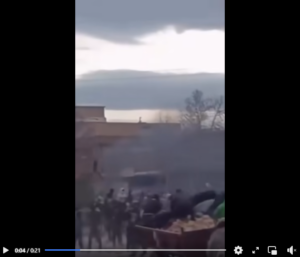
Watch this video. It’s a scene of young people in Kuhdasht working together to push back against the crackdown.
This is a small town with fewer than 100,000 people, a mountainous place, full of unemployed youth. They are distributing bricks to fight.
If someone genuinely thinks these people are in the streets because of “Western propaganda,” rather than because of their own daily needs and pressures, then they should either see a psychiatrist or take a hard look at the racism and fascistic instincts they’re carrying.
This video captures that exact moment that says: they have nothing to lose but their chains.
January 1, 2026
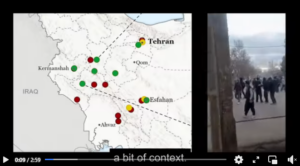
I’ve seen this map from #Iran and related to these days’ protests being shared widely, so I wanted to add a bit of context. Why do you think so many protests in Iran happen in winter, and why in the western, mountainous parts of the country?
Winter is when everyday economic pressure peaks, and seasonal unemployment sharpens frustration. It’s also the time when the largest number of seasonal and migrant workers either return to their hometowns or get ready to leave again, after the agricultural season, for warmer areas where work is more available, like the south or the more industrial central regions. That’s why some western and mountainous areas see their highest volume of protests in winter.
Note that the western areas of #Tehran are essentially the more industrialized region of the city, and this is the main base of industrial and service workers who work in the Tehran province, which has a population of approximately 12 million people.
Many of the places in the Zagros mountains (red dots) highlighted on this map have been constant protest hotspots because of water scarcity, unemployment, and high suicide rates. These aren’t necessarily the “key” provinces and cities in Iran where protests immediately produce nationwide political shockwaves, but as you can see, the scale of protest and the level of violence there are almost unmatched compared to many other regions.
I want to say that these protests in the western and mountainous regions aren’t simply a direct echo of what happened in Tehran. They have their own local drivers and long-running grievances. But the events in Tehran’s bazaar, and what they signal about prices, currency instability, and the broader economic breakdown, have clearly amplified anger and resentment in these areas, pushing existing frustrations closer to the surface.
At the same time, #Kurdistan and #Azerbaijan have been extremely cold and snowy these days, making street protests practically impossible right now. Keep in mind, too, that protests in these regions are met with far heavier violence than elsewhere, which changes both the form and the dynamics of mobilization in ways that look very different from other parts of the country.

January 1, 2026
For years, the Pahlavi project has tried to sell itself as a “solution” to Iran’s crisis. However, the closer you look, the more it resembles a political brand seeking a country, rather than a serious alternative grounded in society.
December 31, 2025
December 31, 2025
December 30, 2025
December 30, 2025
December 30, 2025
December 30, 2025
First, they’ve reviewed and slowed down the process that was supposed to bring all businesses, one by one, into the VAT system.
December 30, 2025
Video: Police clash with protesters in Tehran’s Shush Square
In Iran, this is no longer a fight over which narrative is real and which one is fake. The real question is how the crisis can actually be solved. Neither the Islamic Republic’s promises to fix people’s problems nor the false claims pushed by the Pahlavi/ Zionist camp, and their attempt to create a war atmosphere, will improve this situation.
Meanwhile, the government spokesperson said the administration “recognizes” the people’s protests and claimed that even “radical voices” will be heard.
The regime has only one real path in front of it: ending authoritarian rule, opening space for dialogue, and lowering tensions in the region. China and Russia have already shown they follow their own interests, and Iran’s situation doesn’t really matter to them. Otherwise, Trump wouldn’t be able to casually threaten Iran with another round of bombing.

December 30, 2025
This interview, conducted last week, is significant in that it addresses today’s crisis.
In the final part of this interview, published by a local Iranian outlet and focused on Iran’s corrupt, rent-based economy, Laylaz turns to Marx’s The Eighteenth Brumaire of Louis Bonaparte and talks about the possible rise of a “Bonapartist” figure. His argument is simple: if the ruling class can no longer govern in the old way, and the ruled classes cannot take power either, politics may move toward a strong, decisive force, like a more centralized state, or a leader who promises “order.”
The obvious point in Iran is this: the crisis of political alternatives cannot be solved by parliamentary hopes or promises of “democratization” alone. When the security apparatus is the backbone of the state, any economic crisis can quickly turn into a security crisis. In that kind of system, economic reform without opening space for social organization often becomes a kind of shock therapy against poorer people. That, in turn, weakens legitimacy even more and increases the temptation to rely on repression. This vicious circle is what Laylaz calls a “closed loop.”
Iran’s economy can no longer be explained only through charts and monetary policy. It functions inside a rent-seeking security state that wants control, but also fears the consequences of real control. Sanctions exist, but they hit a body that was already sick and already built around rent. Inflation exists, but it is not just a mistake or a technical problem; it can also work as a tool that shifts wealth and helps reproduce the existing order. Most importantly, “indecision” is not only about individual leaders being weak, it is a political expression of a legitimacy crisis and a crisis in the balance of power.
“Iran has been looted.” When a country reaches a point where making big decisions creates political danger, and not making decisions means continued looting, then only one kind of solution is left in front of society.
Saeed Laylaz is an Iranian economist and journalist. He teaches at Shahid Beheshti University in Tehran and once edited Sarmayeh (“Capital”), a reform-minded business newspaper that was closed in 2009. He also worked as an adviser to former President Mohammad Khatami and is known as a pro-reform public commentator.
Laylaz became more widely known outside Iran after he was arrested during the crackdown that followed the 2009 election, and later received a nine-year prison sentence. Since then, he has stayed a well-known analyst of Iran’s political economy. He often argues that sanctions do not work alone, and that they interact with domestic governance problems, rent-seeking, and deep weaknesses in Iran’s banking and budget system.
December 30, 2025
Putting aside the fascist propaganda about “foreign interference” or “the return of the Shah”, narratives that have also echoed in parts of the international media, the most serious demands raised over the last few days, showing the link between labor protests and the bazaar, are these:
1- Turning the currency collapse and inflation from an “accident” into a “policy,” and asking who wins and who loses from it.
2- Focusing on the budget, wages, taxes, and austerity, in other words, seeing the state as a tool for managing the crisis in favor of those at the top.
3- Demanding the removal of contractors, wage equalization, and an end to the multi-tier labor market.
4- Exposing and resisting the ties between private ownership, security institutions, and rent-seeking in industrial and mining workplaces.
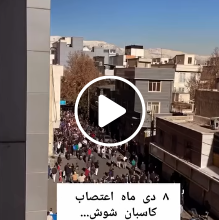
December 29, 2025
A number of videos have been circulating about the strike at Tehran’s Grand Bazaar. This strike is exceptional in its own way, and nothing on this scale has been seen before.
I should also say this: pro-monarchy/Pahlavi groups, backed by the propaganda machines of Israel and the United States, are trying to push their own narrative by claiming people are chanting slogans like “bring back the Shah.” But most of the videos suggest their claims are not only inaccurate—many of the images promoted by certain outlets likely aren’t even real.
Be careful with the videos and images. More than half of Iran is cold and snowy right now, yet some clips being shared show people in summer clothes. At the moment, apart from southern Iran and a few islands, most other regions are under heavy snowfall.
December 29, 2025
Students at the University of Tehran were still chanting on campus up until about an hour ago. Student activists have issued a call for tomorrow, urging people to join the protests and the bazaar strike.
Pezeshkian, the president of the Islamic Republic, claimed in a tweet that he has tasked the interior minister with speaking to the Bazar protesters in order to “resolve their problems.”
December 29, 2025
Students in Tehran University’s dorm complex say the dorm gates have been shut on them, and special forces are patrolling around the area.
In a statement released today, a group of student activists voiced support for the bazaar protests and called on students to stand in solidarity with the protesters.
In another report, students began their protests.

December 29, 2025
People in Iran have been fighting this situation for decades, not just reacting to a “bad day,” but pushing back against a durable system of enforced instability. Life in Iran has felt, for years, like walking on shaky ground: inflation, a collapsing currency, wages that lose their meaning, capital flight, institutional corruption, and a ruling elite that keeps telling people to “be patient” while sharpening the tools of pressure at the same time. Today, the bazaar protests; yesterday it was retirees; tomorrow it’s workers; the day after, students. This is a continuous thread, not a set of isolated dots.
This past summer, while protests continued with high intensity and a heavy cost, another curtain dropped: the growing emptiness of U.S. and European claims about “human rights.” The same actors who talk about freedom from podiums showed, in practice, that human rights are a political switch for them, not a principle. What was laid bare in Palestine wasn’t only a humanitarian catastrophe; it exposed a double standard that measures the value of a human life by passport and geography. Under that kind of logic, expecting “moral solidarity” from above feels less like realism and more like asking a mirage for water.
That same summer also wore down an old myth even further: the claim that protests in Iran are “foreign-made.” On the surface, this narrative helps the state turn every form of dissent into a security case. But logically it has a serious flaw: if the main engine of protest were “foreign hands,” then the moment when outside interference had the best chance to be decisive—those same days, that same summer, should have ended it. If everything could be run by remote control, why does society keep boiling up again and again, regardless of the ups and downs of foreign policy? The persistence and repetition of protest is exactly the sign that we’re dealing with an internal social cause, not an imported show.
None of this requires naivety. Yes, there are organizations and currents tied to outside powers; that’s a reality in many countries. But that fact does not “explain” a society of 90 million people. Iran is not a single-voice, single-group country; it’s a complex mix of classes, ethnic communities, generations, ways of life, and political experiences. Reducing all of that to a foreign conspiracy is less analysis than insult, an insult to people’s agency. And that exact insult shows up both in domestic security propaganda and in the worldview of parts of the Western political scene that understand the world not through its people, but through geopolitical chess pieces.
Now, protests are returning with livelihoods and the economy at the center, and the same old propaganda is being warmed up again. For the state, this story has a vital function: it turns protest from a “right” into a “threat.” It turns the demand for bread and a livable life into a security file. It turns a citizen into an “agent.” And then it frames repression not as violence, but as duty. This mechanism has been tested over and over: first the label, then the warning, then the crackdown, then forced silence, and then… the crisis returns, because you can’t solve a crisis with tear gas.
Reality is this naked for us. Like that motorcycle courier who stood alone in front of an army of brutal enforcers. This is the point where you have nothing left to lose. And the repressor ends up even angrier and more demoralized than before, because he knows bullets don’t work the way they used to.
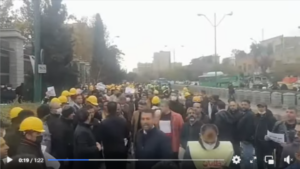
December 10, 2025
December 3, 2025

December 3, 2025
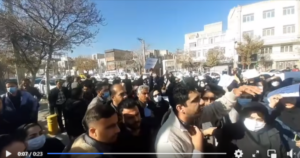
November 25, 2025
November 25, 2025

November 19, 2025

November 17, 2025
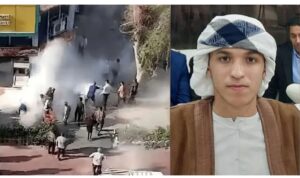
November 13, 2025

November 12, 2025

November 10, 2025

November 9, 2025
November 7, 2025
The Islamic Republic wasn’t just the name of a regime; it was a project to “Islamize Iran” and push the idea that our culture is the official Shi’a reading, full stop. They thought they’d found the formula: schools, mosques, media, and law all working to make bodies and voices uniform. But the project failed because everyday life refused it: women and youth, music and the streets, and a historical memory that reaches beyond clerical law. Now, after four decades of cursing “nationalism,” they’ve been forced to spend from that very national stock to persuade the public, exactly when, by the regime president and MPs’ admissions, the economic crisis is less about sanctions and more about structural corruption and inept management.
At the same time, after years of dead-end strategies, they’ve pivoted toward “cutting a deal with the West,” while staging shows in Tehran to suggest: “Iranian, hold your head high; the world kneels before you.” This visual stunt is a clumsy attempt to repair a reputation that has collapsed at home—marketing external swagger to hide internal illegitimacy.
Alongside this comes a special project: blending mythical heroes and historic commanders with the IRGC soldier. Recreating the scene of a Roman emperor kneeling before a Sasanian king next to legendary Iranian figures and then sticking that image chain onto the IRGC uniform. The aim is obvious: a force whose name is tied to embezzlement, crony contracting, and bloody repression at home and across the region needs a symbolic cleansing. They even avoid mentioning the regular Army—an institution that, at least in public memory, is less associated with rent-seeking and business ventures. This isn’t about “reviving Iran’s glory”; it’s about whitewashing the institution that holds the real levers of the economy-and-security state.
The “Islamizing Iran” project failed, and the “Islamic/Historic Iran” makeover will fail too, because it asks people to choose spectacle over real life. Society, meanwhile, brings politics back to streets, schools, and networks of mutual aid: informal councils, solidarity campaigns, semi-underground unions, and small but stubborn media. That’s where “symbolic capital” slips out of monopoly and moves toward public ownership. And that’s why the Islamic regime is cracking down so violently on the left and the labor movement in Iran.

November 4, 2025
November 3, 2025