Cutting SNAP is Forcing Hunger Across the US

H.R.1, also knows at the One Big Beautiful Bill (OBBB), was signed into law by President Trump on July 4, 2025. The OBBB permanently provides tax relief for corporations and wealthy Americans by extending the 2017 Tax Cuts and Job Acts that was set to expire at the end of 2025. There was a massive increase in funding for Immigration and Customs Enforcement (ICE) agents and operations and for detention facilities. To pay for the ramping up of state repressive forces, the OBBB requires slashing Medicaid, the Affordable Care Act (ACA), the Supplemental Nutrition Assistance Program (SNAP), and student loan programs—resulting in the largest-ever cuts to social safety net programs in US history.
According to the Congressional Budget Office (CBO) and Joint Committee on Taxation (JCT), there has been a total of $1.4 trillion cut from social programs while another $4.5 trillion in federal tax revenues has been lost, while an additional $325 billion will be spent on the military and for immigration enforcement. The reality is that OBBB slashed taxes for the millionaires and billionaires, while reducing safety net programs needed to support low-income families and keep them from falling into poverty and hunger.
Trump regime guts SNAP, bloats ICE and feeds the war machine
The federal government has historically been the primary funding source for SNAP nutritional assistance benefits, with the states only sharing in the administrative expenses. Now, the states must fund up to 75 percent of the administrative cost by 2027. This will increase state expenditures immensely. It is projected that the total share of state budgets having to be allocated to SNAP funding to fill the enormous gap will increase in range from 50 percent to 768 percent, depending on the size of the state population and per capita need.
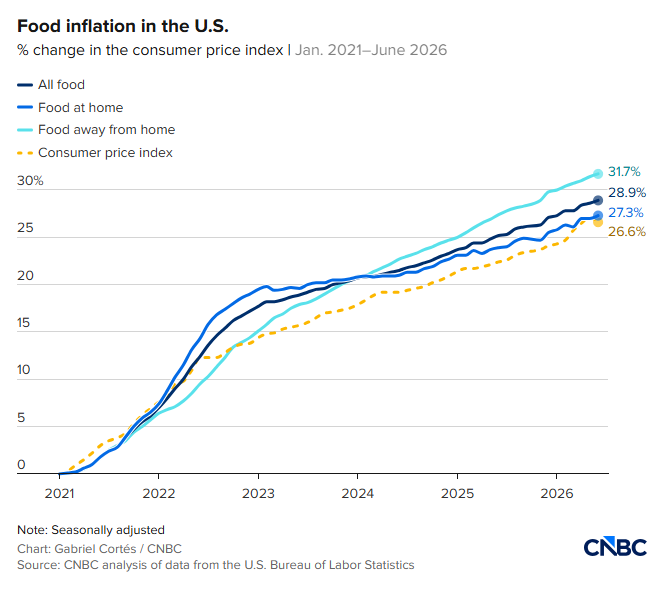
SOURCE: CNBC
The states that will be most heavily impacted by these cuts are those already experiencing higher poverty rates, such as Oklahoma, Mississippi, New Mexico, and West Virginia. Those impacted the most will be seniors, children, and people living in rural areas.
To further downsize state enrollments, most states have implemented punitive measures such as increased work requirements, restrictions on those excluded from citizenship, and in some cases terminating SNAP-related tax breaks for low-income people to help cover internet and home heating and cooling costs. These changes have already resulted in fewer recipients.
To deal with the defunding crisis, state governments will likely reduce or eliminate other programs that support education and healthcare, develop further measures to reduce access to SNAP funds, and potentially end their SNAP programs altogether.
Coupled with the changes to Medicaid, more people will be pushed into poverty—or deeper into poverty—while public resources will be siphoned into the US war machine and to hire more ICE agents to terrorize and brutalize immigrants and refugees.
The origins of SNAP: excess food for those in need
Originally called the Food Stamp Program (FSP) when implemented in 1939, the idea was to provide farm surpluses with citizens in need of food to help both the farmers, small grocers and citizens during the Great Depression. There has always been forced hunger in the “land of plenty”, but the insatiable and crisis-plagued system of capitalism needs millions of more people to go hungry so that billionaires (and now trillionaires) can hoard even more wealth, while making us pay for their expansive imperial wars and ongoing genocide in Palestine.
Today, 47.9 million individuals, nearly 14% of the total population, live in food-insecure households. Approximately 1 in 9 people in the US rely on SNAP benefits to make ends meet. Economic and social hardships, including insufficient wages, lack of affordable housing, inadequate healthcare, and systemic discrimination are contributing factors to food insecurity and poverty. At the same time, 120 billion pounds of food, approximately 40 percent, is wasted in the US every year, more than in any other country.
Instead of making efforts to connect those in need with available resources and nourishment, the government has implemented more hurdles for low-income families to meet new requirements to obtain their necessities for survival.
Capitalism exploits workers and impoverishes millions in the process
The many additional restrictive measures in the law include the raising of the work requirement age from 54 to 64; the lowering of the exemption age for households with children from 18 to 14 years old; the removal of exemptions for more than 300,000 veterans, people experiencing homelessness, and young people who recently aged out of foster care; and restrictions on the the ability of states to temporarily wave work requirements based on local job markets. The Congressional Budget Office estimates that these new work requirements will force over 2.4 million people off SNAP benefits.
While SNAP benefits are being cut for the most vulnerable populations in the US, ICE is actively detaining and deporting anyone racially profiled as an immigrant. Industries who rely heavily on immigrant workers such as construction, agriculture, transportation, hospitality, manufacturing and healthcare are facing labor shortages. In the US capitalist system, the criminalization and repression of immigrants is designed to push down wages so capitalists can extract more profit. Deportation of immigrant workers is producing a contradiction in that even as labor shortages emerge, capitalist owners are reluctant to raise wages to a high enough level necessary to attract replacement workers; resulting in a declining jobs market and fewer employment opportunities. As the job market contracts, those SNAP recipients charged with meeting work requirements have fewer employment opportunities available to them.
We are building a revolutionary socialist organization to end a system that requires millions to go hungry in the richest society in history
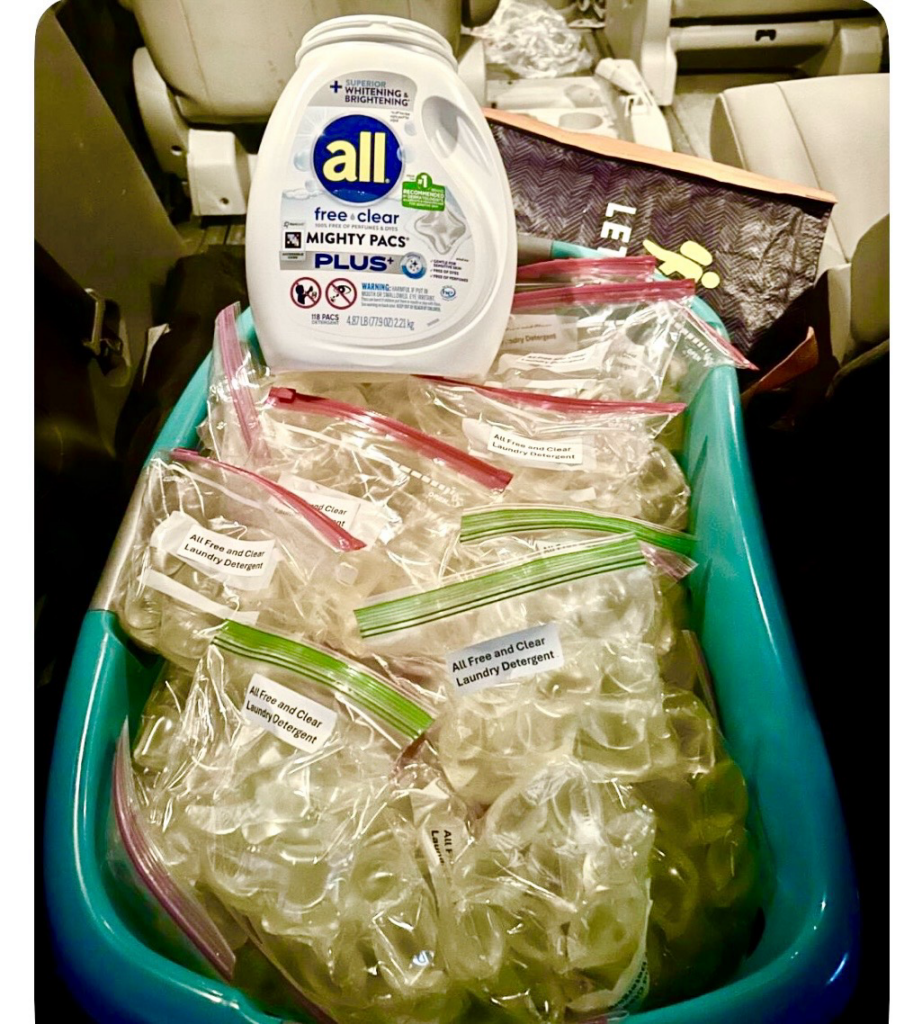
PHOTO: SOCIALIST HORIZON-MADISON
As the capitalist state pushes us into poverty and hunger, we have to organize and fight back until we build workers’ power to the point where we can force those in power to allocate the resources necessary to meet all our social needs. We have to organize the fight against capitalism and for socialism. We can also band together and provide mutual aid to those in immediate need along the way.
Laundry soap is one of the most highly sought items at pantries as it is excluded, along with other personal care items, from SNAP benefits. Our Madison mutual aid project provides laundry soap pods to our neighbors in need. Through our small contribution and interactions with those in need, we are building relationships in the community while sharing our goal to build a socialist organization to fight for a socialist society that guarantees the basic needs of all people.
CONTACT OR GET INVOLVED WITH SOCIALIST HORIZON OF MADISON BY CLICKING HERE.